Tag: Resources

  • New Toy: The Phantom 3 is Coming!

    Continuing my series of resource links, today I wanted to share the latest drool-inducing toy to come out of the DJI camp: the upgrade to their popular Phantom quad-copter, the Phantom 3!

    The Phantom 3 Professional Quadcopter boasts a breath-taking array of new in-built features: and a 4K camera on a 3-axis gimbal that also happens to take 12 mega-pixel stills is just the tip of the very tall iceberg. A 2km (2000 metres) tall iceberg that will beam a 720p HD view of anything and everything that your kick-ass camera can see. Seriously, there is so much that can be said about this beast of a release… but I will save that for the professionals. Check out the official video below – and then we can make a collective drool-puddle together.
  • PSA: Say No To VVS

    Continuing my series of resource links, today I want to share two vital videos for all mobile phone video content creators. IMHO, these public service announcement (PSA) videos ought to do the Internet rounds at least once a week! So please join the cause, and help us say no to VVS.

  • Video Essay: How to Do Action Comedy – Zhou

    Continuing my series of resource links, today I want to swing back around to one of my favourite video essayists at the minute – yep, it is time to come back to some work by cinephile Tony Zhou. He has a great cache of stuff – and this is the second instalment of his work that I will be sharing (the first being How to Do Visual Comedy). In this fun video essay of How to Do Action Comedy – originally released at the end of 2014 – Zhou once again masterfully walks us through the visual story-telling of global action-phenom, Jackie Chan. You will definitely find it to be, “… a refreshing break from the shaky cam gimmicks of popular directors like Brett Ratner, J.J. Abrams or Michael Bay.” I hope you enjoy it as much as I did.

  • Article: “15 Things That Stanley Kubrick Can Teach You About Filmmaking”

    Continuing with my series of resource links – today I want to share with an article which I just finished reading over at the Taste of Cinema entitled, “15 Things That Stanley Kubrick Can Teach You About Filmmaking” (by David Biggins). Below you will find the cliff notes version of the article, but I really encourage you to head over and avail yourself of the full version as soon as you can – it is well worth the read!

    In short form, here are the 15 Things That Stanley Kubrick Can Teach You About Filmmaking:

    1. Match Cuts: “[Not] invented by Kubrick but, so far, no one has ever used it quite as dramatically.”
    2. Using Natural Lighting: “Using the light that would be available to the characters at that moment in time… Kubrick often preferred to light his films in this way.”
    3. Using Artificial Lighting: “The Shining uses both natural and artificial light to help change with the mood changes that occurs during the horror.”
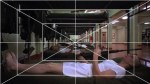
    4. Vanishing Points: “It is perhaps the most easily definable element of a film that makes it recognisably ‘Kubrickian’.”
    5. Tracking Shots: “[Kubrick’s films] feel dynamic because he let his camera flow through the narrative; firstly through tracking…”
    6. Steadicam Shots: “… directors can film a scene in one long continuous take, not having to disturb the actors.”
    7. Hand-held Camerawork: “Picking the right moment to use a hand-held camera can really add drama to a film.”
    8. Long Shot: “A long shot allows you to place a lot of information on screen…”
    9. Wide-angle Lenses in Cramped Spaces: “Many of Kubrick’s films are notable for their use of extreme wide-angle lenses.”
    10. Wide-angle Lenses in Large Spaces: During Paths of Glory’s court martial sequence… Kubrick uses a wide-angle lens so that the sense of depth is maintained but he’s only keeping Private Ferol (Timothy Carey) in focus.”
    11. Zoom Lenses: “[It can be] a beautiful shot that’s uninterrupted by edits, which helps to heighten the tension by keeping the audience member completely in the scene.”
    12. Choice of Film Format: “Kubrick’s productions offer useful examples as to why a filmmaker might have chosen to work with different film formats.”
    13. Chronology: “It’s fairly commonplace to see non-linear narrative films [today]… but it was atypical in 1956… By switching around the order of events, Kubrick dramatically altered how we perceive certain characters on screen.”
    14. Use of Colour: “Kubrick’s true masterstroke is having created a film that uses colour so vividly that it becomes a talking point in itself.”
    15. Casting: “He took this drive for authenticity one step further for Full Metal Jacket when he cast real drill instructor Ronald Lee Ermey…”
    An example of the Kubrickian vanishing point.


    Want to read the unabridged article, you can find it here.

  • Short Film: Table 7 (Slavnic)

    Coming back to my series of resource links – from video essays, to cinematographer interviews, how-to tips and the like – today I want to share with you a short film that is a long-time favourite of mine. The premise and the execution by film-maker Marko Slavnic are very well done. There’s not much to say about this really: if this kind of short doesn’t light your fire, then your wood’s wet. Enjoy!

  • Video Essay: On Archive Remakes?

    Continuing with this series of resource links – from video essays, to cinematographer interviews, how-to tips and the like – today I want to circle back around to an idea that I have often ruminated upon: that of the cinema remake. There are the obvious remakes, of course. Same name, same (or similar enough) plot-line… just large chunks of the same same same. Gone in 60 Seconds, The Planet of the Apes, Annie, The Absent Minded Professor… you get my point.

    But what I continue to love discovering is the myriad of videos that highlight those less distinguishable remakes (such as the essay I shared a little few weeks ago about Scorsese: while not a direct remake, there are enough similarities in the visual elements – and the story itself – to notice that the same director had made the piece, albeit with 50-years separating them). And so on Monday I happily stumbled upon a fun little piece that does a side-by-side comparison between archive films and the Paramount/Spielberg phenomena – Raiders of the Lost Ark! Yep, you read that correctly: this side-by-side comparison by a Vimeo user named Stoo clearly indicates that Raiders seems to have borrowed from quite a few old film ideas and visuals as well. But seriously – why just read about it: you have to see this for yourself!

  • Video Montage: “You Just Don’t Get It, Do You?” (Jeff Smith)

    Continuing with my new series of resource links – from video essays, to cinematographer interviews, how-to tips and the like – today I want to share a fairly comprehensive video montage compiled by independent filmmaker Jeff Smith while he worked under the former film blog FilmDrunk (now an integrated part of the Uproxx machine).

    We have all endured the time-wasting ravages of poor film-making. Genre, acting, writing, editing, CGI… the lists that have been made to scorn the worst films are in abundance! And really, this montage is tipping it’s hat to this time honoured tradition of naming and shaming. Where it differs is in the manner with which it dispenses the shame. Rather than stick to the script of a “top ten” or “25-worst” list – this fun little montage rather cleverly shames one of Hollywood’s cheesiest go-to lines: “You Just Don’t Get It, Do You?” (and variations thereof). Packed with 102(!) examples of this writing cliché at its dreadful best – regardless of film (blockbuster, cult-hit, international film, or whatever) – I hope you can have a bit of a laugh at this throw back clip from 2011!

  • Video Essay: Fade to White (Swinney)

    Continuing with my new series of resource links – from video essays, to cinematographer interviews, how-to tips and the like – today I want to take a look at a short video essay by Baltimore-based editor, filmmaker, and fellow cinephile Jacob T. Swinney. For a wide range of cinematic reasons, the “fade from black” and the “fade to black” are ubiquitous in film and television. As such, the less frequent use of a “fade from white” or a “fade to white” makes for quite the visual impact upon a viewer. Where black offers transition and/or closure (and additionally these effects are subtly controlled by the amount of time taken to complete the fade) – Swinney has postulated in the description of today’s video essay that “the much less common fade to white seems to create a sense of ambiguity.”

    The fascinating thing for me is that doing a Google search of the term “film fade to white” predominantly returns various bloggers sharing this very clip. Prior to its release last week, it seems that about as many people were talking about this film-makers tool as those who happened to use it. So it is excellent to see such extra interest being generated for a simple – albeit quite evocative – effect! Without further ado then, may I add to the conversation by sharing the same video that many others have already shared. 🙂

  • How To: 20 Premiere Tips in 20 Minutes (Jeff Greenberg)

    Continuing with my new series of resource links – from video essays, to cinematographer interviews, how-to tips and the like – today I want share an informative how-to video clip presented by Jeff Greenberg on behalf of Future Media Concepts – and as the title suggests, today’s how-to is for the proud Adobe Premiere Pro users.

    I understand that many of us will know these tips and tricks – nevertheless you might be surprised to find one or two gems that may have forgotten about. Or better yet, you will learn something altogether new – such as having the capacity to adjust the gain on an entire bin of music. That was news to me!

    I will warn you though: while the content is definitely informative, the presentation of the how-to is somewhat dry. If you can handle that – then jump on in to some of this Premiere Pro trickery with the rest of us!

  • Video Essay: Hitchcock’s Cuts in ROPE

    Continuing with my new series of resource links – from video essays, to cinematographer interviews, how-to tips and the like – today I want to take a look at a short video essay. In it, this clip succinctly explores just one of the myriad of cinematic techniques that were employed by the film maestro of thrill and suspense – the “eloquent, suspenseful, quirky, and eminently entertaining”1 Alfred Hitchcock.

    In this, Hitchcock’s first colour film (and first use of James Stewart) – audiences the world over became somewhat convinced that the 1948 thriller was a single-take wonder. Now don’t get me wrong: these have been done since this film. But in Rope we find Hitchcock employing an especially creative use of framing to create and maintain an illusion of continuity (as in practice, reels only had either 10 minutes or 20 minutes to film on). By 2015 standards it may seem passé, but I would strongly suggest that any of the techniques employed by a technical master of cinema such as Hitchcock is worth considering in any age. Ergo, I hope you enjoy this video essay by Vashi Nedomansky.