Continuing my series of resource links, today I want to share a fun little video montage by Spanish videographer Eusebio Poveda Paredes – namely his homage to cinema in cinema.
Featuring an amazing 139 clips from 93 different films – there is not a whole lot to add to the joy of simply diving in – so please do, and enjoy this fun little labour of love.
Continuing my series of resource links, today I wanted share a piece that discusses the recently released movie, Pitch Perfect 2. For those who don’t know (or don’t care, I guess), this comedy sequel is about about a cappella singers (which, for what it’s worth, made more than US$70 million at the box office on its opening weekend . That is more than the first Pitch Perfect took in over its entire theatrical release in 2012 – as well as being the biggest debut ever for a movie musical).
As the title suggests, today’s link is to an audio interview done with Kay Cannon: writer of Pitch Perfect 2. Well before Pitch Perfect came on the scene though, Cannon sunk her teeth into writing for comedy television – such as NBC’s hit 30 Rock (she won the Writers Guild of America Award for Best Comedic Series for her work on 30 Rock on three separate occasions) as well as Fox’s New Girl.
From NPR’s Bullseye with Jesse Thorn, this is a fascinating insight into the world of comedic writing for film and television in particular… and it is a great reminder that all of you writers out there are an indispensable part of the production process.
Continuing my series of resource links, today I wanted to share the latest drool-inducing toy to come out of the DJI camp: the upgrade to their popular Phantom quad-copter, the Phantom 3!
The Phantom 3 Professional Quadcopter boasts a breath-taking array of new in-built features: and a 4K camera on a 3-axis gimbal that also happens to take 12 mega-pixel stills is just the tip of the very tall iceberg. A 2km (2000 metres) tall iceberg that will beam a 720p HD view of anything and everything that your kick-ass camera can see. Seriously, there is so much that can be said about this beast of a release… but I will save that for the professionals. Check out the official video below – and then we can make a collective drool-puddle together.
Continuing my series of resource links, today I want to swing back around to one of my favourite video essayists at the minute – yep, it is time to come back to some work by cinephile Tony Zhou. He has a great cache of stuff – and this is the second instalment of his work that I will be sharing (the first being How to Do Visual Comedy). In this fun video essay of How to Do Action Comedy – originally released at the end of 2014 – Zhou once again masterfully walks us through the visual story-telling of global action-phenom, Jackie Chan. You will definitely find it to be, “… a refreshing break from the shaky cam gimmicks of popular directors like Brett Ratner, J.J. Abrams or Michael Bay.” I hope you enjoy it as much as I did.
Continuing with my series of resource links – today I want to share with an article which I just finished reading over at the Taste of Cinema entitled, “15 Things That Stanley Kubrick Can Teach You About Filmmaking” (by David Biggins). Below you will find the cliff notes version of the article, but I really encourage you to head over and avail yourself of the full version as soon as you can – it is well worth the read!
In short form, here are the 15 Things That Stanley Kubrick Can Teach You About Filmmaking:
Match Cuts: “[Not] invented by Kubrick but, so far, no one has ever used it quite as dramatically.”
Using Natural Lighting: “Using the light that would be available to the characters at that moment in time… Kubrick often preferred to light his films in this way.”
Using Artificial Lighting: “The Shining uses both natural and artificial light to help change with the mood changes that occurs during the horror.”
Vanishing Points: “It is perhaps the most easily definable element of a film that makes it recognisably ‘Kubrickian’.”
Tracking Shots: “[Kubrick’s films] feel dynamic because he let his camera flow through the narrative; firstly through tracking…”
Steadicam Shots: “… directors can film a scene in one long continuous take, not having to disturb the actors.”
Hand-held Camerawork: “Picking the right moment to use a hand-held camera can really add drama to a film.”
Long Shot: “A long shot allows you to place a lot of information on screen…”
Wide-angle Lenses in Cramped Spaces: “Many of Kubrick’s films are notable for their use of extreme wide-angle lenses.”
Wide-angle Lenses in Large Spaces: During Paths of Glory’s court martial sequence… Kubrick uses a wide-angle lens so that the sense of depth is maintained but he’s only keeping Private Ferol (Timothy Carey) in focus.”
Zoom Lenses: “[It can be] a beautiful shot that’s uninterrupted by edits, which helps to heighten the tension by keeping the audience member completely in the scene.”
Choice of Film Format: “Kubrick’s productions offer useful examples as to why a filmmaker might have chosen to work with different film formats.”
Chronology: “It’s fairly commonplace to see non-linear narrative films [today]… but it was atypical in 1956… By switching around the order of events, Kubrick dramatically altered how we perceive certain characters on screen.”
Use of Colour: “Kubrick’s true masterstroke is having created a film that uses colour so vividly that it becomes a talking point in itself.”
Casting: “He took this drive for authenticity one step further for Full Metal Jacket when he cast real drill instructor Ronald Lee Ermey…”
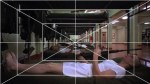
An example of the Kubrickian vanishing point.
Want to read the unabridged article, you can find it here.
Coming back to my series of resource links – from video essays, to cinematographer interviews, how-to tips and the like – today I want to share with you a short film that is a long-time favourite of mine. The premise and the execution by film-maker Marko Slavnic are very well done. There’s not much to say about this really: if this kind of short doesn’t light your fire, then your wood’s wet. Enjoy!
Continuing with this series of resource links – from video essays, to cinematographer interviews, how-to tips and the like – today I want to circle back around to an idea that I have often ruminated upon: that of the cinema remake. There are the obvious remakes, of course. Same name, same (or similar enough) plot-line… just large chunks of the same same same. Gone in 60 Seconds, The Planet of the Apes, Annie, The Absent Minded Professor… you get my point.
But what I continue to love discovering is the myriad of videos that highlight those less distinguishable remakes (such as the essay I shared a little few weeks ago about Scorsese: while not a direct remake, there are enough similarities in the visual elements – and the story itself – to notice that the same director had made the piece, albeit with 50-years separating them). And so on Monday I happily stumbled upon a fun little piece that does a side-by-side comparison between archive films and the Paramount/Spielberg phenomena – Raiders of the Lost Ark! Yep, you read that correctly: this side-by-side comparison by a Vimeo user named Stoo clearly indicates that Raiders seems to have borrowed from quite a few old film ideas and visuals as well. But seriously – why just read about it: you have to see this for yourself!
Today I plan on taking a small detour from my series of informative posts so that I can have a minor rant about movie trailers. I have always loved the trailers: and growing up with vocal-maestro’s such as Don LaFontaine and Hal Douglas leading the charge for many years, I think it is easy to see why. Nevertheless, as I get older, and as my appreciation for the work and machinations of cinema and television has deepened, I must admit to a growing discontent with more modern trailer traits.
Even though director Robert Zemeckis once claimed that the purpose of trailers was to inform the audience – “We know from studying the marketing of movies, people really want to know exactly every thing that they are going to see before they go see the movie. It’s just one of those things.” – I tend to disagree. For me, the point of a trailer is to hook in the audience: to tease us, to leave us wanting more, to get us to a point of wanting to depart with our hard-earned money in order to see the production. That is the non-verbal contract that is entered into when an audience member – namely, me – watches a trailer. And to be honest – a poorly made trailer can very easily break that contract.
So having just watched a brand new trailer – let me share it with you (as well as a comparison trailer), and I’ll explain where I’m coming from.
To my mind, the trailer that fails in its duty of audience-teasing is the one for Southpaw. The reason is fairly simple: minus the ultimate ‘battle’ sequence (which to be honest, we can already draw our own conclusions on, right?), it feels like I have just seen the whole story. Seriously. The. Entire. Story. It is already behind in points by simply being film which explores a tired premise (a fallen champion looking for redemption/love) dumped into our laps – but then we get a blow-by-blow plot outline while we’re at it. Who needs to see the film when the trailer has basically given us a Reader’s Digest Condensed Books version of the movie? The contract is broken, and I feel no need to see the film.
Comparatively, Nolan’s teaser for The Dark Knight was a total knock-out for millions of fans globally. It is not like the world doesn’t know about Batman, you know. Given that the Dark Knight’s greatest nemesis has always been the Joker, his involvement was also a no-brainer. Nevertheless, we were masterfully teased into wanting more. That is what I am talking about!
I am mourning the loss of genuinely great movie trailers that don’t have to spell it out. Is anyone with me?
Continuing with my new series of resource links – from video essays, to cinematographer interviews, how-to tips and the like – today I want to share a fairly comprehensive video montage compiled by independent filmmaker Jeff Smith while he worked under the former film blog FilmDrunk (now an integrated part of the Uproxx machine).
We have all endured the time-wasting ravages of poor film-making. Genre, acting, writing, editing, CGI… the lists that have been made to scorn the worst films are in abundance! And really, this montage is tipping it’s hat to this time honoured tradition of naming and shaming. Where it differs is in the manner with which it dispenses the shame. Rather than stick to the script of a “top ten” or “25-worst” list – this fun little montage rather cleverly shames one of Hollywood’s cheesiest go-to lines: “You Just Don’t Get It, Do You?” (and variations thereof). Packed with 102(!) examples of this writing cliché at its dreadful best – regardless of film (blockbuster, cult-hit, international film, or whatever) – I hope you can have a bit of a laugh at this throw back clip from 2011!
Continuing with my new series of resource links – from video essays, to cinematographer interviews, how-to tips and the like – today I want to take a look at a short video essay by Baltimore-based editor, filmmaker, and fellow cinephile Jacob T. Swinney. For a wide range of cinematic reasons, the “fade from black” and the “fade to black” are ubiquitous in film and television. As such, the less frequent use of a “fade from white” or a “fade to white” makes for quite the visual impact upon a viewer. Where black offers transition and/or closure (and additionally these effects are subtly controlled by the amount of time taken to complete the fade) – Swinney has postulated in the description of today’s video essay that “the much less common fade to white seems to create a sense of ambiguity.”
The fascinating thing for me is that doing a Google search of the term “film fade to white” predominantly returns various bloggers sharing this very clip. Prior to its release last week, it seems that about as many people were talking about this film-makers tool as those who happened to use it. So it is excellent to see such extra interest being generated for a simple – albeit quite evocative – effect! Without further ado then, may I add to the conversation by sharing the same video that many others have already shared. 🙂
 Waiting 2B Scene
You must be logged in to post a comment.