People love to know their place. Even when a person considers themselves to be unique and counter-cultural, knowing that they are unique and counter-cultural gives them a sense of location in the grand scheme of things.
That is why I loved reading this article – Shoot, Produce, Edit: The Rise of the Pro “Shreditor” – by the guys at Premium Beats. It actually gives me a named location in the grand scheme of media-making: I am a shreditor. It sounds cool. Almost TMNT’ish.
I am a Shredder. I mean, a Shreditor.
How about you? Where do you fit in the media landscape?
Welcome to Whatsit Wednesday – a series that will resource you to do video better, offering hints and tips on how to improve your videocraft. Today, we’re sharing a short article on why we need to understand colour temperature.
Is understanding colour temperature and balance in an increasingly web-based ‘phoneography‘ (think cinematography for phones) marketplace really that important? The answer is simple: yes.
Understanding colour temperature will improve the quality of your work and give you an advantage over your competitors – those average Joe’s who either don’t know any better, or frankly don’t care. In short, this is the kind of stuff that separates the amateurs from the professionals – and even if you ARE an amateur, the equation is simple: when you know more about what you’re doing, you will begin to produce visuals that look more professional.
Covering a range of issues such as camera white balance and RAW, as well as examining some of the physics of colour, Richard Lackey has once again delivered an excellent article that will help you understand colour temperature, so that “you will always be ready to balance your camera even in situations where you have no control over lighting at all.”
Don’t worry, there are no spoilers here. Well, not unless you haven’t watched any of The Walking Dead over the last five years perhaps. Other than that, you ought to be golden with this post.
I have done a wide variety of media work over the years: this often means needing to up-skill. When I first tried my hand at After Effects, the free training that the team at Creative Cow offered was there to guide me through a very steep learning curve. Fast forward to right now, and I usually just check out the highlights off the latest e-newsletter. Well today I couldn’t help but notice that there were linking to a fantastic interview that they did with David Boyd back in 2012.
Be warned, it is a little TLDR (yeah, not a video interview… it’s that old school type of article!)… but Boyd has since gone on to DP on shows like Agents of S.H.I.E.L.D., as well as directing episodes of Sleepy Hollow, Once Upon a Time, 12 Monkeys, and four more episodes of The Walking Dead. So the dude knows his business. From CreativeCow: “David’s insights into shooting in general, and the core aesthetic of The Walking Dead in particular, are every bit as enjoyable as the day we first published it.” Yep!
Buzzfeed is usually the haunt of Internet jokery and inane quizzes: and yet today I was pleasantly surprised to see a list of stills that is quite magnificent… a list they have deemed, “129 Of The Most Beautiful Shots In Movie History.”
It is a pretty reasonable list – but you will need to be ready to scroll waaaaaay past the fold on this one! As an additional pre-warning, as is always the case – there will be plenty of stills that make you go, “What the?”
Want to see what they have on offer: click on this image below (picture is number 51 on the list, and harkens back to a recent blog post of mine).
Whether you started out in photography, or you were dumped into the deep end of video and film – you will know of the rule of thirds (RoT). It’s one of those unstoppable forces that influence every aspect of both!
Like many “rules” in avenues of artistic endeavour, the RoT is an excellent starting point – particularly if you haven’t yet developed an instinct for good visual composition. Once you know the why and how behind effectively utilising the RoT, however, you ought to expand your visual vocabulary – developing visuals that aren’t necessarily tied down to the RoT (I can’t help but think of Barbossa here: “the code is more what you’d call “guidelines” than actual rules.”).
So if you are willing to wade out into the deeper waters of visual framing and composition, then this article by Doddle offers a great variety of framing illustrations that go beyond the rule of thirds: the golden spiral, quadrants, diagonals, the centre, as well as playing around with the edges and intentionally unbalancing the frame.
If you happen to want a more in-depth video essay to help you shake your RoT shackles, then look no further than this great example by the Every Frame of Painting YouTube channel – it breaks down the quadrant system of framing that was used in the 2011 film Drive. Enjoy!
Alright, you ought to know that I am not a big fan of TED talks. It’s not because they are bad talks per se, it’s just that when a multi-million dollar organisation has pretty much zero internet presence in an internet age (as is the case with the owners of TED – that is the Sapling Foundation), it makes me wonder what agenda is being hidden in the background.
But I digress!
In today’s post, I actually want to share an article which was originally published in April 2014 by the team at Screencraft. It’s one of those guilty pleasure posts, you know. <insert voice of Matt Smith as Dr Who> Top 10 lists are cool! </insert> So check out what constitutes their “10 favorite TED Talks that all filmmakers, screenwriters and storytellers should watch” right here.
If you think it’ll be TLDR, then for brevities sake, their list looks a lot like this (links included):
Continuing my series of resource links, today I want to link out to a great little article that gives a concise breakdown of the camera choices that were made for the latest Marvel Universe blockbuster – Avengers: Age of Ultron – with insights by the DP himself, Ben Davis. You can read the full piece here.
The fun fact for me was seeing that the diverse little beastie – the BlackMagic Design Pocket Cinema Camera – gets a shout out as a one of the tools used to make the film. Yeah that’s right – portions of the epic Avengers was shot on a BMDPCC! Very cool. So check out the article, and let me know what you think.
Continuing my series of resource links, today I want to share a great article that was published a while back by those in the RED Universe. Really, there’s no surprises here as the title says it all: it is an introduction to video production for those of you who are photographers. Granted, many of you may know this stuff. Nevertheless, if you are just starting to play around with the video functionality on your DSLR – or you have never really dug into the kind of background information that can make your videos a little better – then this article is a must. I hope you find it useful.
Continuing with my series of resource links – today I want to share with an article which I just finished reading over at the Taste of Cinema entitled, “15 Things That Stanley Kubrick Can Teach You About Filmmaking” (by David Biggins). Below you will find the cliff notes version of the article, but I really encourage you to head over and avail yourself of the full version as soon as you can – it is well worth the read!
In short form, here are the 15 Things That Stanley Kubrick Can Teach You About Filmmaking:
Match Cuts: “[Not] invented by Kubrick but, so far, no one has ever used it quite as dramatically.”
Using Natural Lighting: “Using the light that would be available to the characters at that moment in time… Kubrick often preferred to light his films in this way.”
Using Artificial Lighting: “The Shining uses both natural and artificial light to help change with the mood changes that occurs during the horror.”
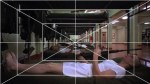
Vanishing Points: “It is perhaps the most easily definable element of a film that makes it recognisably ‘Kubrickian’.”
Tracking Shots: “[Kubrick’s films] feel dynamic because he let his camera flow through the narrative; firstly through tracking…”
Steadicam Shots: “… directors can film a scene in one long continuous take, not having to disturb the actors.”
Hand-held Camerawork: “Picking the right moment to use a hand-held camera can really add drama to a film.”
Long Shot: “A long shot allows you to place a lot of information on screen…”
Wide-angle Lenses in Cramped Spaces: “Many of Kubrick’s films are notable for their use of extreme wide-angle lenses.”
Wide-angle Lenses in Large Spaces: During Paths of Glory’s court martial sequence… Kubrick uses a wide-angle lens so that the sense of depth is maintained but he’s only keeping Private Ferol (Timothy Carey) in focus.”
Zoom Lenses: “[It can be] a beautiful shot that’s uninterrupted by edits, which helps to heighten the tension by keeping the audience member completely in the scene.”
Choice of Film Format: “Kubrick’s productions offer useful examples as to why a filmmaker might have chosen to work with different film formats.”
Chronology: “It’s fairly commonplace to see non-linear narrative films [today]… but it was atypical in 1956… By switching around the order of events, Kubrick dramatically altered how we perceive certain characters on screen.”
Use of Colour: “Kubrick’s true masterstroke is having created a film that uses colour so vividly that it becomes a talking point in itself.”
Casting: “He took this drive for authenticity one step further for Full Metal Jacket when he cast real drill instructor Ronald Lee Ermey…”
An example of the Kubrickian vanishing point.
Want to read the unabridged article, you can find it here.
Continuing with my new series of resource links – from video essays, to cinematographer interviews, how-to tips and the like – today I want to share with you a fun,though potentially career-saving, list of things to make sure we do on the first day of a shoot so that, “No matter how low you are on the food chain… [you] make sure your first day isn’t your last day.”
It’s a great piece put together by media maestro (producer, author, and presenter) Phil Cooke: and I am sure we can all learn something from this once again – even if it from reading the comments section!


 Waiting 2B Scene
You must be logged in to post a comment.