Category: Blogging

  • Blog: You’re Missing the Point

    Today I wanted to hit pause on my resource posts so that I could indulge in some genuine blogging. Yep, I’m spouting forth my own thoughts and ideas on this one!

    So, I saw a Facebook friend share the following video earlier this week. Given that it garnered 3-million views in its first week (and was at 44 million when I watched it) – it is the definition of viral. 2-years later, and we have to give it credit. It continues to pique the interest and ire of the interwebs. At least that is what I assumed when I watched it:

    In actuality, these days it seems to be less about interest, and more about ire. If the comments section was anything to go by, the biggest issue about this clip today is whether it is genuine or not. Honestly – from a benign “This is fake…” to a more scathing, “ITS JUST SOME GEE BAG SLUT TRAMP TRYING TO GET INTERNET FAMOUS BY TAKING ADVANTAGE OF PEOPLE’S EMPATHY…”, the negative, stupid, and outright trolling commentary on this video is mind-boggling! How could people so quickly miss the “moral of the story”?

    You know what? Yes – the video was staged. I know this because I did five minutes of research to discover that the Belgrade office of global advertising juggernauts Saatchi & Saatchi were behind the whole thing: “Saatchi & Saatchi Belgrade and Fund B92 [decided] to take action, shake the public out of the lethargy and put [domestic violence] into the focus of Serbian society.”

    At it’s heart, this video was a PSA addressing domestic abuse. It was as simple as that. The moral of the story was – and is – to raise awareness about this issue: and in its early stages, I would argue that it was a success. “Media outlets from all over the world have been reporting on this cry for help by an anonymous victim of domestic violence, which is in itself a testament of how widespread this problem is.”

    Whether it was a real person who felt that was their only way of dealing with the situation, or whether it was an actor playing a role – that question ought to have been a distant runner up to the impetus behind the video: let’s shine some light on the cowardly men who are beating up on women. If your first response was that the whole thing was fake or – worse still – that the woman involved was just a “gee bag slut tramp trying to get internet famous…” – then I would humbly suggest that you’re missing the point, and the Internet would be a better place without such stupidity clogging up the bandwidth.

  • Video Montage: A Stock Homage to Directors

    Continuing my series of resource links, today I want to share a video that is something of a lesson in styling. Now, you could ask almost any cinematographer in the world what they think of stock footage, and you most often find yourself on the end of a tirade against some element of the entire stock industry. Truth be told, it is easy to see why they feel that way. Invariably, stock shots look quite same-same, lacking in ingenuity and visual oomph. With that being said – I must protest the blanket hostility towards stock footage. With the development of fresh sites such as Dissolve and DeathToStock – the creative types are claiming back the unique elements that have been lacking in the great pool of stock footage and imagery – and it has been a breath of fresh air!

    So, it was very cool to stumble on this video created by the ShutterStock team that is a stylised homage to some of the great directors… and it has been done using only stock footage.  Now is it brilliant? Nah. Let’s be honest. But it is really good! And it is exciting to think that as an indie film-maker, or documentary producer, or whatever… we might very well be able to squeeze in a reasonable stock shot that isn’t going to raise the collective ire of cinematographers any more. And that is worth celebrating just a little.

    You can also read about this whole process here.

  • Video Article: Understanding Jump Cuts

    Continuing my series of resource links, today I want to share a video I stumbled on a little while ago. Coming from Vimeo’s Riley Hooper, it offers a pretty concise explanation of the technique known as a jump cut. Even if you have never heard the term before, I can guarantee that you all know what a jump cut looks like… though picking up pace in more and more places, it is a ubiquitous transition amongst the most popular of YouTube’s vloggers. As someone cleverly observed, “Anything other than a jump cut would create a slower experience that would leave you less stimulated and thus more likely to click away.”1

    So, jump right in. 🙂

  • Article: Stills Photographer Intro to Video (RED)

    Continuing my series of resource links, today I want to share a great article that was published a while back by those in the RED Universe. Really, there’s no surprises here as the title says it all: it is an introduction to video production for those of you who are photographers. Granted, many of you may know this stuff. Nevertheless, if you are just starting to play around with the video functionality on your DSLR – or you have never really dug into the kind of background information that can make your videos a little better – then this article is a must. I hope you find it useful.

    “This article gives an overview of the key differences in order to make the “cinephotography” transition as straightforward as possible…”

  • New Toy: The Phantom 3 is Coming!

    Continuing my series of resource links, today I wanted to share the latest drool-inducing toy to come out of the DJI camp: the upgrade to their popular Phantom quad-copter, the Phantom 3!

    The Phantom 3 Professional Quadcopter boasts a breath-taking array of new in-built features: and a 4K camera on a 3-axis gimbal that also happens to take 12 mega-pixel stills is just the tip of the very tall iceberg. A 2km (2000 metres) tall iceberg that will beam a 720p HD view of anything and everything that your kick-ass camera can see. Seriously, there is so much that can be said about this beast of a release… but I will save that for the professionals. Check out the official video below – and then we can make a collective drool-puddle together.

  • PSA: Say No To VVS

    Continuing my series of resource links, today I want to share two vital videos for all mobile phone video content creators. IMHO, these public service announcement (PSA) videos ought to do the Internet rounds at least once a week! So please join the cause, and help us say no to VVS.

  • Video Essay: How to Do Action Comedy – Zhou

    Continuing my series of resource links, today I want to swing back around to one of my favourite video essayists at the minute – yep, it is time to come back to some work by cinephile Tony Zhou. He has a great cache of stuff – and this is the second instalment of his work that I will be sharing (the first being How to Do Visual Comedy). In this fun video essay of How to Do Action Comedy – originally released at the end of 2014 – Zhou once again masterfully walks us through the visual story-telling of global action-phenom, Jackie Chan. You will definitely find it to be, “… a refreshing break from the shaky cam gimmicks of popular directors like Brett Ratner, J.J. Abrams or Michael Bay.” I hope you enjoy it as much as I did.

  • Top Ten: Films About Nostalgia

    Today I wanted to hit pause on my resource posts so that I could indulge in a staple of trashy tabloid journalism and YouTube videos – a Top Ten List!

    This is a list I stumbled upon over at Hollywood.comBack in the Good Old Days — Films About Nostalgia. What a great idea for a top ten! Now if you click on the link, you’ll get the full breakdown – but for those who think it will be a case of TLDR, then fear not – I have the short version right here for you!

    10. The World’s End.
    9. Midnight In Paris.
    8. Dazed and Confused.
    7. Pleasantville.
    6. Sunset Boulevard.
    5. High Fidelity.
    4. Citizen Kane.
    3. The Sandlot.
    2. The Artist.
    1. Hugo.

    So, what do you think – do you agree with their list? Is there a case for other nostalgic films to bust a move, or is it as unassailable as MC Hammer?

  • Article: “15 Things That Stanley Kubrick Can Teach You About Filmmaking”

    Continuing with my series of resource links – today I want to share with an article which I just finished reading over at the Taste of Cinema entitled, “15 Things That Stanley Kubrick Can Teach You About Filmmaking” (by David Biggins). Below you will find the cliff notes version of the article, but I really encourage you to head over and avail yourself of the full version as soon as you can – it is well worth the read!

    In short form, here are the 15 Things That Stanley Kubrick Can Teach You About Filmmaking:

    1. Match Cuts: “[Not] invented by Kubrick but, so far, no one has ever used it quite as dramatically.”
    2. Using Natural Lighting: “Using the light that would be available to the characters at that moment in time… Kubrick often preferred to light his films in this way.”
    3. Using Artificial Lighting: “The Shining uses both natural and artificial light to help change with the mood changes that occurs during the horror.”
    4. Vanishing Points: “It is perhaps the most easily definable element of a film that makes it recognisably ‘Kubrickian’.”
    5. Tracking Shots: “[Kubrick’s films] feel dynamic because he let his camera flow through the narrative; firstly through tracking…”
    6. Steadicam Shots: “… directors can film a scene in one long continuous take, not having to disturb the actors.”
    7. Hand-held Camerawork: “Picking the right moment to use a hand-held camera can really add drama to a film.”
    8. Long Shot: “A long shot allows you to place a lot of information on screen…”
    9. Wide-angle Lenses in Cramped Spaces: “Many of Kubrick’s films are notable for their use of extreme wide-angle lenses.”
    10. Wide-angle Lenses in Large Spaces: During Paths of Glory’s court martial sequence… Kubrick uses a wide-angle lens so that the sense of depth is maintained but he’s only keeping Private Ferol (Timothy Carey) in focus.”
    11. Zoom Lenses: “[It can be] a beautiful shot that’s uninterrupted by edits, which helps to heighten the tension by keeping the audience member completely in the scene.”
    12. Choice of Film Format: “Kubrick’s productions offer useful examples as to why a filmmaker might have chosen to work with different film formats.”
    13. Chronology: “It’s fairly commonplace to see non-linear narrative films [today]… but it was atypical in 1956… By switching around the order of events, Kubrick dramatically altered how we perceive certain characters on screen.”
    14. Use of Colour: “Kubrick’s true masterstroke is having created a film that uses colour so vividly that it becomes a talking point in itself.”
    15. Casting: “He took this drive for authenticity one step further for Full Metal Jacket when he cast real drill instructor Ronald Lee Ermey…”
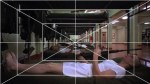
    An example of the Kubrickian vanishing point.


    Want to read the unabridged article, you can find it here.

  • Short Film: Table 7 (Slavnic)

    Coming back to my series of resource links – from video essays, to cinematographer interviews, how-to tips and the like – today I want to share with you a short film that is a long-time favourite of mine. The premise and the execution by film-maker Marko Slavnic are very well done. There’s not much to say about this really: if this kind of short doesn’t light your fire, then your wood’s wet. Enjoy!